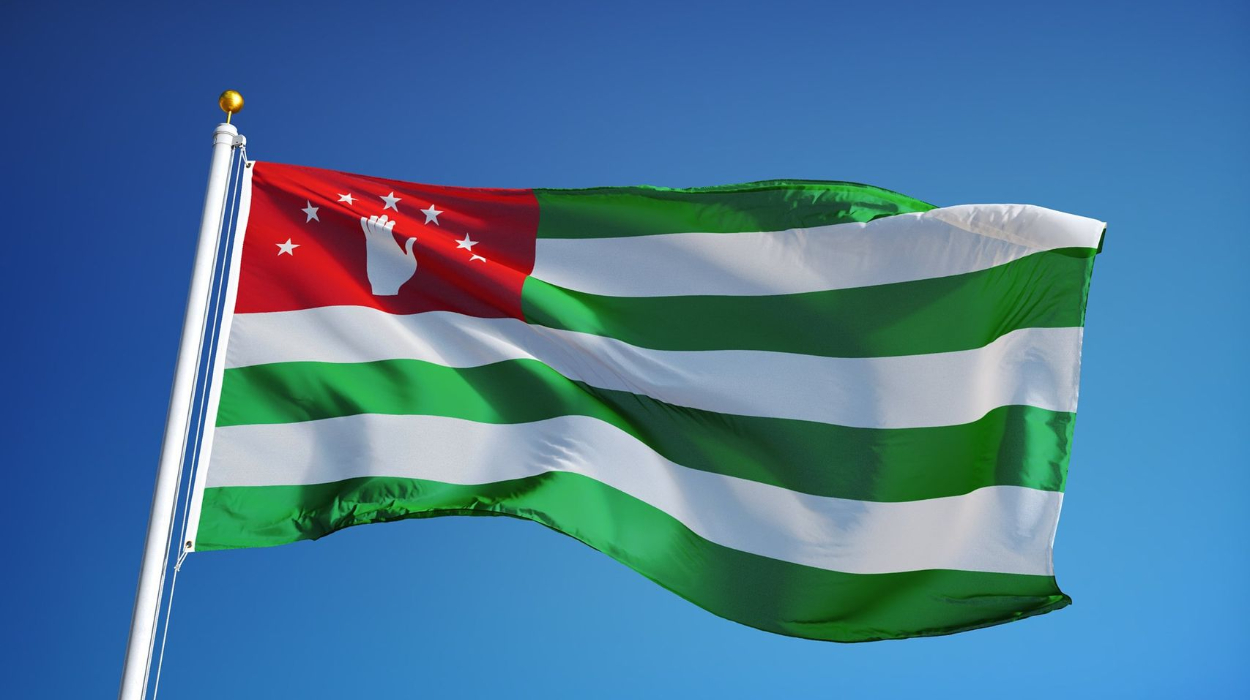
Abkhazia is marking the 27th anniversary of the Act on State Independence, the 1999 document that formally declared the republic a sovereign state.
The Act was signed on 12 October 1999, six years after Abkhazian forces reached the Ingur River on 30 September 1993, ending a 413-day war with Georgia.
It followed a referendum on 3 October 1999, in which 97.7% of those voting backed the 1994 Constitution, which had already defined Abkhazia as a sovereign state. Turnout was 87.6%.
The vote was held alongside Abkhazia’s first nationwide presidential election. At the time, 219,534 citizens with voting rights lived in the republic, 58.5% of the pre-war electorate.
The Act appealed to the United Nations, the Organisation for Security and Co-operation in Europe and the wider international community to recognise Abkhazia’s independence, citing the right of peoples to self-determination.
Stalled talks
The six-year gap between the end of the war and the declaration reflected years of negotiations with Georgia on a possible common state.
According to the Abkhazian side, Tbilisi offered little beyond a return to the pre-war status quo. In 1997, a protocol prepared for the two presidents to sign collapsed when Georgia declined at the final stage.
By 1999, the leadership under President Vladislav Ardzinba had concluded that further talks would lead nowhere. After the Act, Abkhazia said future dialogue with Georgia would be limited to good-neighbourly relations and specific disputes.
Risky move
The declaration came at a difficult time. Much of the international community viewed it with suspicion, and Russia, wary of separatism on its own territory during the Chechen conflict, had backed Georgia’s territorial integrity and imposed sanctions and a blockade on Abkhazia.
Political scientist Astamur Tania, who advised President Ardzinba from 1999 to 2005, has said the decision was driven by Ardzinba and Viacheslav Chirikba, who wanted to make Abkhazia’s political course clear to the outside world.
The Act was deliberately worded to confirm, rather than newly proclaim, independence, stressing that Abkhazia had functioned as a sovereign state since 1994.
The gamble paid off. Relations between Moscow and Tbilisi deteriorated in the late 1990s, and the Act brought no new sanctions. In August 2008, after the Russo-Georgian war, Russia recognised Abkhazia’s independence, and several other states later followed.