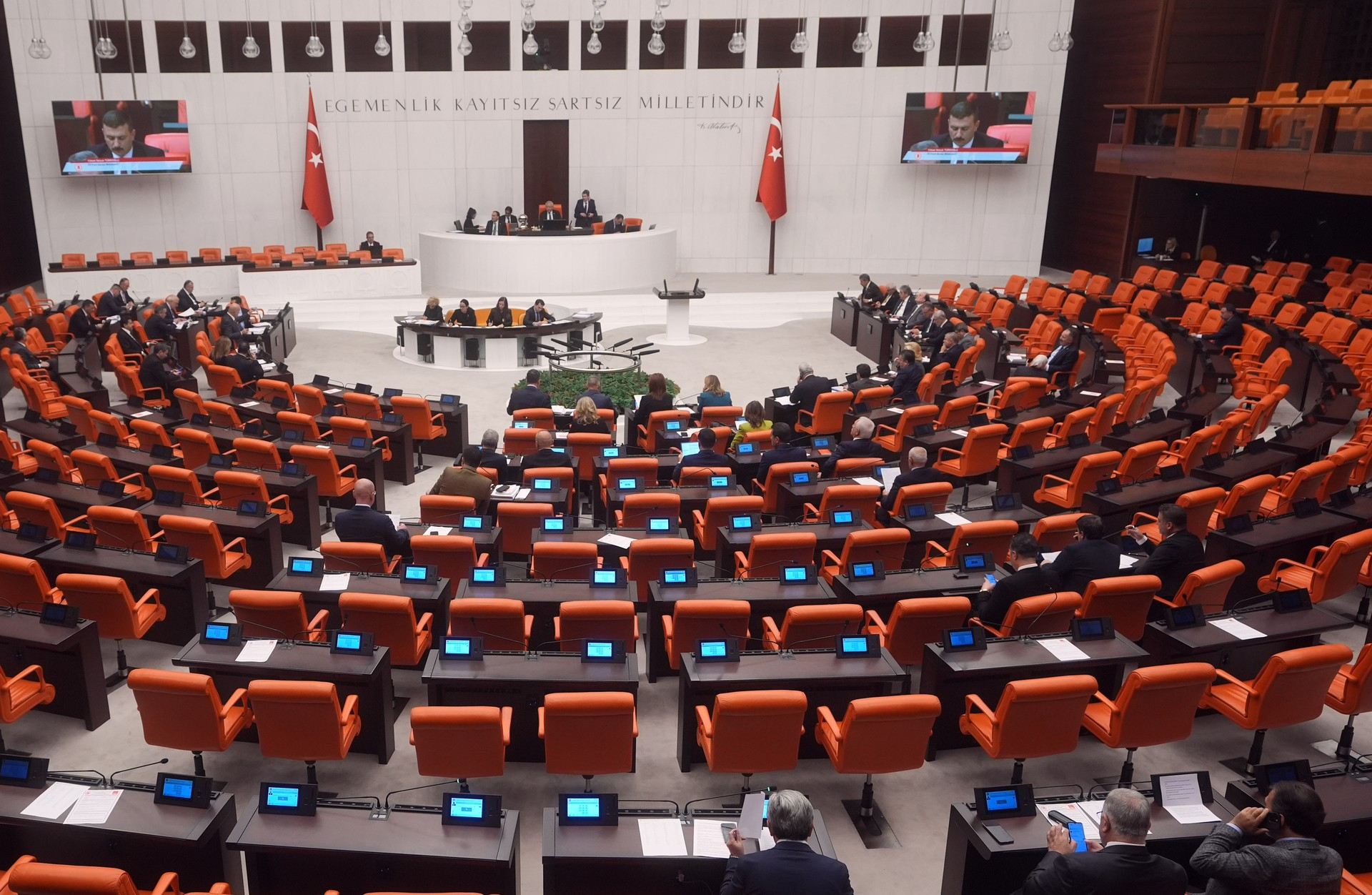
Members of the delegation that attended the founding of the Friendship Group with Abkhazia say Georgia's envoy lobbied 23 Turkish deputies to stay away, and that the deputies refused.
Georgia's ambassador to Türkiye contacted Turkish MPs before last week's founding of a Friendship Group with Abkhazia in Ankara and urged them not to take part, according to a member of the Abkhazian delegation that attended.
Inar Gitsba, a member of the People's Assembly and formerly Abkhazia's plenipotentiary representative in Türkiye, told a briefing at the Public Chamber in Sukhum that 23 deputies had reported being approached.
'While this event was being prepared there was opposition from ill-wishers who demand that the isolation measures against our citizens remain in place,' he said. 'The deputies of the Turkish parliament, there were 23 of them, all told us that the Georgian ambassador in Türkiye had contacted them and tried to persuade them not to take part, speaking of Georgia's so-called territorial integrity.'
The MPs declined, he said. 'They answered that they were elected by the people and act within their powers, the Constitution and the laws of the Republic of Türkiye, and that nobody can tell them which events to attend, where to go or which questions to raise. Their position was clear and measured.'
Tbilisi had made no official comment on the initiative when AbkhazWorld reported the group's founding on 18 November. Georgian diaspora organisations in Türkiye had issued a statement opposing it the day before the meeting.
The group was set up at a hotel in Ankara on the evening of 17 November, at a meeting organised by the End the Isolation of Abkhazia Initiative together with opposition deputies. It wants Türkiye to accept Abkhazian passports as valid travel documents, to open direct passenger links with Abkhazia and to lift economic restrictions.
The Abkhazian side sent nine people, among them MPs, members of the Public Chamber, officials of the State Committee for Repatriation and representatives of civic organisations. They held meetings in Istanbul as well as Ankara. Their remarks at the Sukhum briefing were published by the Telegram channel Ekho Abkhazii.
Guli Kichba, secretary of the Public Chamber and head of the movement Mothers of Abkhazia for Peace and Social Justice, said the meetings had been warm and at times emotional. What mattered most, she said, was that freedom of movement had been raised in the Turkish parliament itself.
'Freedom of movement for the citizens of Abkhazia has been discussed for 30 years on various international platforms and at the Geneva discussions, but there has been no progress,' she said. 'In my view it is an important step that in a country as strong and as large as Türkiye, a member of Nato, several parliamentary committees have raised this question.'
Abkhazian passports are not recognised by most states, and residents who do not also hold a Russian passport face severe limits on foreign travel. Two Abkhazian deputies invited to Ankara, Akhra Bzhania and Aslan Kobakhia, were unable to make the journey for that reason. Direct sea traffic between Trabzon and Sukhum ended in 1996, when Türkiye complied with the CIS embargo on Abkhazia.
Gitsba said the campaign had begun in the diaspora. Abkhazians in Türkiye, among them Anıt Baba and Bediz Tantekin, organised a petition calling for recognition of Abkhazian travel documents and the opening of passenger routes between the two countries. At a press conference in the Grand National Assembly on 5 August, he said, the initiative gained the support of 174 deputies from ten political parties.
He framed the case as one of the right to freedom of movement under international instruments. He cited Palestine, Kosovo and Taiwan as territories of contested status whose residents nonetheless have workable means of international travel. The delegation, he stressed, was pressing a humanitarian matter and not seeking a debate on Abkhazia's political status.
Since the founding meeting, Gitsba said, members of the group have raised the issue on the floor of parliament, put questions to the foreign minister and taken it to the parliamentary budget committee. The next step is a roadmap setting out which legal and administrative measures recognition of the documents and a passenger service would require. Any further work, he said, would have to proceed within Turkish law.
Inal Khutaba of the State Committee for Repatriation said Adyghe, Circassian, Kabardian and Abaza communities in Türkiye had backed the initiative, and many had offered to help. Temur Rekvava, who heads the Sukhum office of the World Abkhaz-Abaza Congress, said the question went beyond convenience or tourism. 'Overcoming the existing barriers and allowing people to communicate freely accords with fundamental humanitarian principles and respect for human dignity,' he said.
Khutaba acknowledged that change would not come easily. 'During the war many people did not believe we would win,' he said. 'Now too there are probably people who do not believe in this initiative, but I think that together we will achieve a result.'