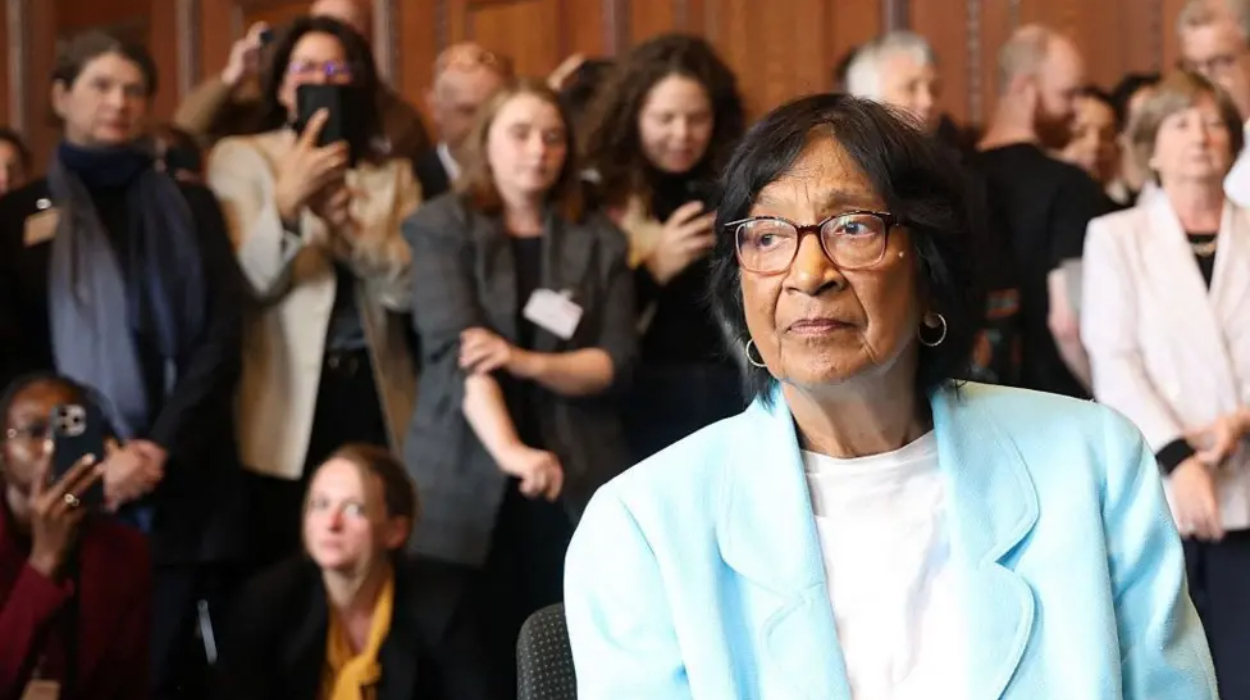
The 85-year-old South African jurist, a former UN human rights chief and international judge, has been honoured for her contribution to peace and international law. Israel condemned the choice; UN leaders and rights groups welcomed it.
Navi Pillay, the South African judge who led the UN human rights office and sat on international tribunals for Rwanda and The Hague, has been awarded the 2026 Nobel Peace Prize.
The Norwegian Nobel Committee said she was chosen for her efforts to promote peace and international law, work it said had helped build a fuller global legal order. Committee chair Jørgen Watne Frydnes said her work had been instrumental in bringing war crimes, crimes against humanity and genocide to trial, and that international law was now an absolute necessity rather than an addition to peace and security.
The committee had been unable to reach Pillay before the announcement. She learned of the award in Nuremberg, at the Palace of Justice where the Nazi leadership was tried after the Second World War, and her first reaction was to assume it was a joke. She has a long link with the city: Pillay was President of the Advisory Council of the International Nuremberg Principles Academy from 2017 to 2025.
She dedicated the prize to survivors of international crimes and to those working in international justice.
A career of firsts
Pillay was born on 23 September 1941 in Clairwood, Durban, the daughter of a bus driver. Under apartheid she became the first woman to open a law practice in Natal Province, in 1967, and defended anti-apartheid activists. She later became the first non-white woman appointed to South Africa’s High Court.
She sat for eight years on the UN tribunal for the 1994 Rwandan genocide, four of them as its president. Her rulings there helped bring a broader definition of rape into international law. She then served on the appeals bench of the International Criminal Court from 2003 and was UN High Commissioner for Human Rights from 2008 to 2014. She also co-founded the women’s rights organisation Equality Now.
She is the fifth South African to receive the Peace Prize, after laureates including Nelson Mandela and Archbishop Desmond Tutu. Last year she received the Sydney Peace Prize.
Gaza and Myanmar
The award is likely to prove contentious. From 2021 to 2025 Pillay chaired the UN Commission of Inquiry on the Occupied Palestinian Territory, which concluded that Israel had committed genocidal acts in Gaza. The panel had no legal authority and did not speak for the UN. It had earlier found that Hamas and other armed groups committed war crimes in the 7 October 2023 attacks.
Israel’s Foreign Ministry described the prize as a grotesque weaponisation of the award. Frydnes said the committee was taking no position on whether Israel’s offensive in Gaza amounted to genocide.
Pillay currently sits as an ad hoc judge at the International Court of Justice in the case brought by The Gambia accusing Myanmar of genocide against the Rohingya. Myanmar denies the charge.
UN Secretary General António Guterres called her a steadfast and independent voice of justice, while UN human rights chief Volker Türk said the award reaffirmed that accountability underpins peace and security. South Africa’s President Cyril Ramaphosa praised her as a pioneering defender of anti-apartheid activists. Amnesty International’s Agnès Callamard, who was with Pillay when the news came, said the prize could not have come at a better time.