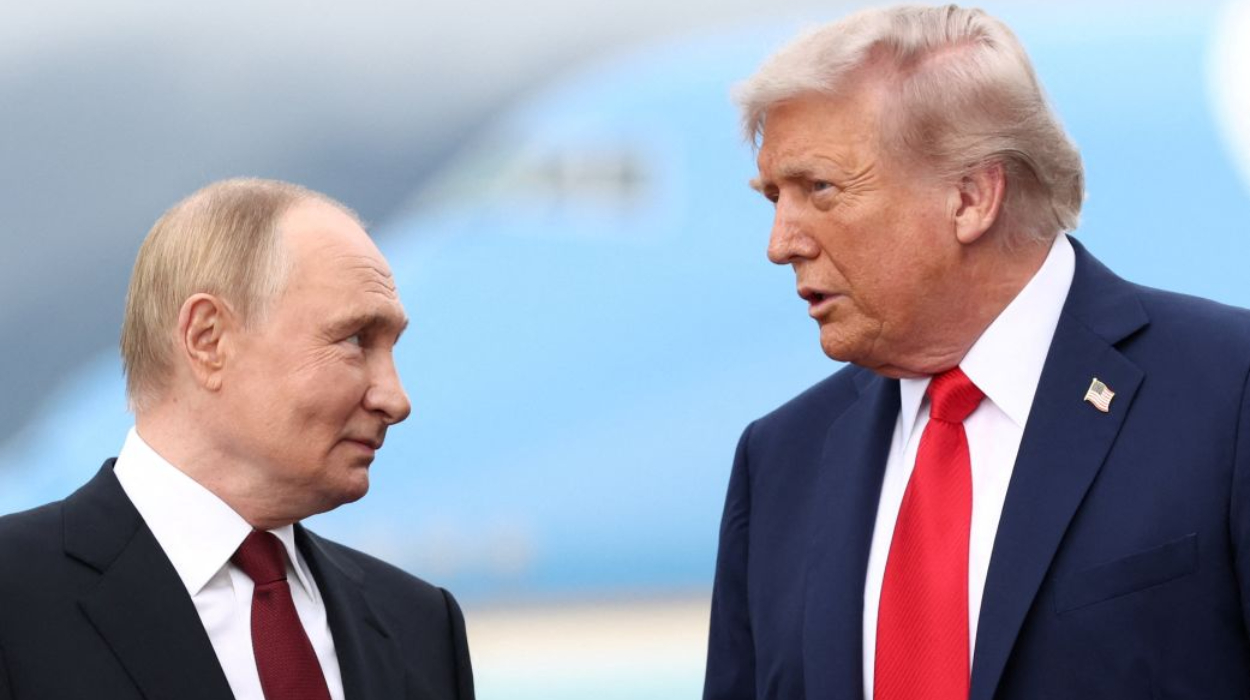
Washington has suspended sanctions on Russian diesel exports until April after Donald Trump announced that Vladimir Putin had agreed to ship fuel to the US, a move Ukraine’s president says will pay for more attacks on his country.
Donald Trump has announced a deal to bring Russian diesel into the United States, drawing sharp criticism from Ukraine’s President Volodymyr Zelensky, who called the agreement a gift to Vladimir Putin.
Writing on Truth Social on Friday, the US president said Putin had agreed to release 300,000 tonnes of diesel immediately ‘to the American and global marketplace’, followed by 500,000 tonnes in November and a further million tonnes after that. He added that another three million tonnes would follow ‘within a short period’, depending on the state of Russia’s refineries, which have been repeatedly hit by Ukrainian drones.
Shortly after the announcement, the US Treasury issued a temporary licence allowing Russian diesel on to the market. Sanctions on Russian diesel exports are understood to be suspended until 7 April, although other Russian assets, including funds held in American banks, remain frozen.
Zelensky said the deal amounted to ‘an investment in a war that must be ended, not prolonged’, and warned that Moscow would repay it with ‘further terror’.
‘We count on America’s fair support for our defence of life, for our defence of people in Ukraine, and on the United States having a correspondingly strong conversation with Russia. A strong one, not a weak one,’ he wrote.
Kremlin welcomes agreement
Putin said he had spoken to Trump about the global energy situation and that ‘the Russian side confirmed its willingness to supply oil and petroleum products to the US market and global markets at large’. His statement gave no figures.
Kirill Dmitriev, Putin’s envoy, said on social media that ‘Russia-US co-operation on diesel and energy will benefit the world’.
It remains unclear what Russia will receive in return, or exactly how the fuel will reach the market.
The agreement marks a striking reversal for Washington. Congress recently passed legislation, signed by Trump, authorising new sanctions and tariffs on countries that import Russian oil and gas. Russia itself banned diesel exports earlier this year.
Doubts over supply and prices
Analysts have questioned whether Russia can deliver the volumes promised, and whether doing so would bring meaningful relief to American drivers.
Tim Armitage, investment strategist at Quilter Cheviot, described the figures as ‘relatively small’. He said the first shipment was equivalent to about 2.25 million barrels, against US daily consumption of around 3.8 million barrels, ‘so it won’t make a material difference to pump prices in the US’.
‘Granted, there are then two more releases to come, but it does appear to be a slightly desperate move by President Trump to try to lower inflation ahead of the midterms,’ he added.
Russia has suffered two waves of severe fuel shortages this year after Ukrainian strikes on its refineries. The International Energy Agency estimates that Russian diesel production has fallen by nearly 30%.
Trump has criticised those strikes, blaming them for rising fuel prices. Zelensky defended them on Friday as a response to ‘Russia’s years-long campaign of terror against Ukraine’s energy sector’.
‘Ukraine will not set Russian oil refineries on fire if Russia does not destroy our energy infrastructure,’ he said.
Pressure at the pump
The deal is the latest attempt by the White House to bring down fuel costs, which have soared since the war with Iran began in February. Diesel has been hit particularly hard, feeding wider inflation and weighing on Trump’s approval ratings ahead of next month’s midterm elections, which will decide whether the Republicans keep control of Congress.
The average US diesel price stands at $6.28 (£4.74) a gallon, according to the motoring organisation AAA, down slightly from a record $6.53 at the end of September. Brent crude, the global benchmark, remains above $103 a barrel, compared with about $73 before the Iran war.
Earlier this week, Trump said he was ‘thinking about’ suspending the federal tax on petrol and announced that red dye diesel, normally reserved for off-road use, could be used on US highways without federal tax. He has also pressed G7 countries into releasing 100 million barrels of oil and diesel from emergency stocks.
UK stands by sanctions
The British government signalled that it would not follow Washington’s lead. ‘The UK’s position could not be clearer,’ a spokesperson said. ‘We will continue working closely with international partners to ensure Ukraine has the military and financial support it needs to defend itself.’
The spokesperson said London would ‘maintain pressure on Russia through the toughest sanctions regime ever imposed by the UK’, adding: ‘Russia could end this war today. We remain committed to supporting Ukraine for as long as it takes and to working with partners to bring about a durable peace.’
The move is also likely to expose Trump to criticism from European allies and pro-Ukraine politicians in Washington, who argue that buying Russian fuel helps finance Moscow’s war.