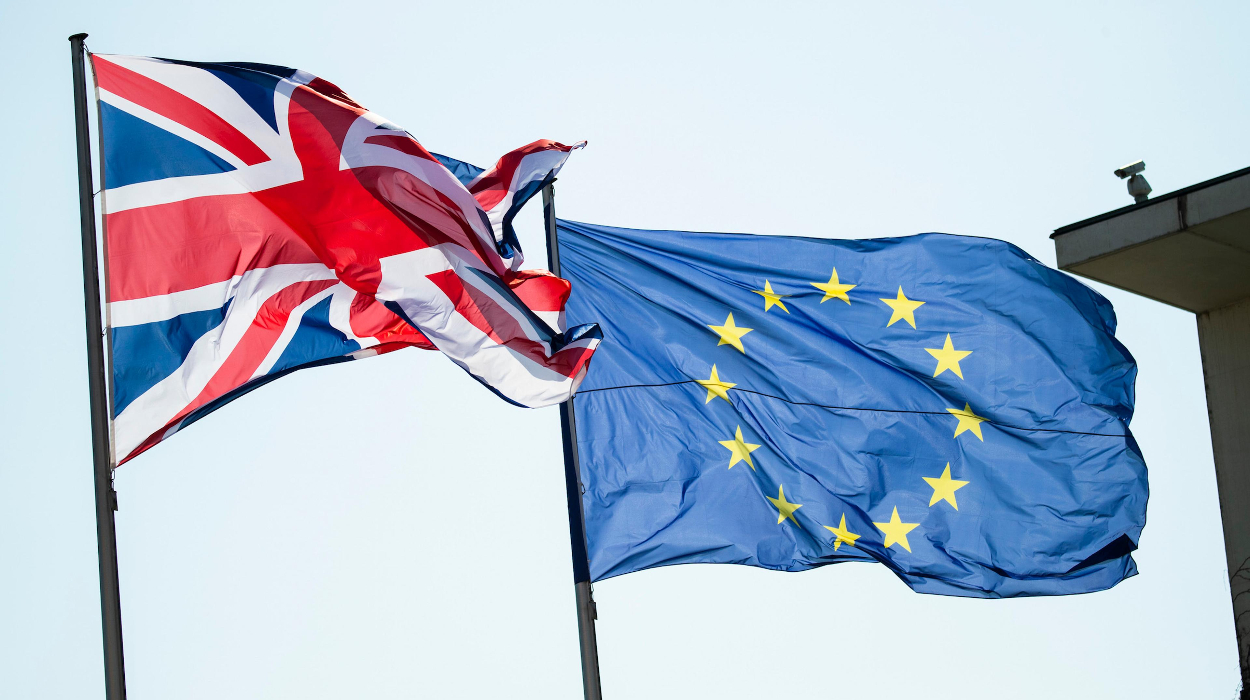
A prime minister says leaving did more harm than good, Europe’s top carmaker says locking Britain out hurts the continent too, and a Wall Street bank puts a £150bn figure on going back. The question Britain was told had been settled for a generation is open again.
For most of the past decade, saying Brexit had failed was a job left to backbenchers, columnists and people shouting at the television. Andy Burnham has now said it from Downing Street.
‘Brexit has done more harm than good,’ he told Labour’s conference last month. On Monday he took the argument to the Commons, telling MPs that failing to seek closer ties with the EU would be ‘a dereliction of duty’. ‘The status quo is not good enough,’ he said.
The public got there before he did. Polling now puts those who think leaving was a mistake at 57 per cent, with only 30 per cent still standing behind it. That is not a passing mood. It is a country that has had ten years to check the receipts.
What was promised
In 2016 the Leave case came down to three things: money, migration and the right to make our own laws.
Start with the money. The red bus promised £350m a week for the NHS. The figure ignored the rebate and the funds that flowed back to farmers, universities and poorer regions, but it was easy to remember, and that was what counted.
What followed was not the crash that the gloomiest forecasters predicted. No recession arrived on the morning of the result, and house prices did not fall through the floor. The damage came more slowly. The trade deal signed at the end of 2020 kept tariffs off most goods but brought the paperwork back: certificates of origin, health certificates, customs declarations. A large exporter can hire people to handle all that. A 50-person weaver in Yorkshire that sells two-thirds of its cloth to Europe cannot. Its owner describes higher costs, slower deliveries of spare parts and a reluctance to buy new machinery while the rules keep shifting. The smaller you are, the more the border costs you.
The Office for Budget Responsibility expects Brexit to leave the economy about 4 per cent smaller in the long run. Several independent studies put the hit at 5 to 8 per cent. Fairness demands the other side too: since 2016 British growth per head has run at about 6 per cent, behind France and well behind the United States, but ahead of Germany. Britain did not collapse. It simply chose to make itself poorer than it would otherwise have been, which is not a mistake you can blame on a pandemic or a war.
‘Global Britain’ was meant to make up the gap. The biggest prize, the India trade deal, came into force this summer. The government’s own assessment puts its long-term boost at 0.13 per cent of GDP. Against a 4 per cent loss, you would need around thirty Indias to break even.
The migration paradox
Migration is where the story gets strange. In the year before the referendum, net migration of roughly 330,000 was treated as a national emergency. Free movement duly ended and arrivals from the EU fell sharply, just as promised.
Then the new points-based system, designed in London and not in Brussels, opened the door to the rest of the world. Hospitals, care homes, universities and hauliers needed staff after the pandemic, and net migration hit 944,000 in the year to March 2023. That is nearly three times the figure once called a crisis, and it happened under a government elected to bring numbers down. In 2012, 42 per cent of non-British migrants came from outside the EU. By 2024 the share was 86 per cent.
Tighter salary thresholds and dearer visas followed, and by late 2025 net migration had fallen to 171,000. Yet only 16 per cent of the public know it has dropped, and almost half believe it is still rising. The numbers moved, but the anger stayed where it was.
As for control of the country itself, Britain had four prime ministers in the twenty years before the referendum. It has had seven in the ten years since. Burnham, who replaced Keir Starmer in July, mentions that figure often.
Back in, through the window
Britain is not walking back through the front door, but it is climbing in through the window. Fishing access for EU boats has been extended to 2038. A summit in Brussels on 20 November will cover a food and drink deal, energy and emissions trading, a youth experience scheme and closer work on migration. The food deal would scrap many of the border checks on agricultural goods, but the price is ‘dynamic alignment’: Britain follows EU food rules as they change. In plain English, that means obeying rules it no longer has a vote on.
The summit was supposed to happen in July. It slipped because of a row over the EU’s ‘Made in Europe’ rules, formally the Industrial Accelerator Act, a law aimed mainly at China that could also shut British firms out of key contracts. France is resisting Burnham’s push for Britain to be included.
This week he found an unexpected ally. Ola Källenius, who runs Mercedes-Benz and chairs the European carmakers’ association, told reporters in Brussels that excluding Britain ‘would be a deliberate choice to worsen the competitiveness of your own industry’ and would ‘weaken the industry on both sides’. Carmakers also want Brussels and London to suspend 10 per cent tariffs on electric vehicles crossing the Channel, which take effect next year under the Brexit trade deal. ‘The deadline is in less than three months’ time,’ the association warned.
Källenius’s point is worth noticing. The cost of the border was never going to fall on Britain alone. European factories lost a customer and a supplier at the same moment.
Then came the money men. Goldman Sachs told clients this week there was ‘significant economic upside from “Breturn”’, estimating that rejoining the single market could add 2 to 5 per cent to the economy, or roughly £61bn to £152bn by the start of the next decade. Leavers will point out, with some justice, that Goldman funded the Remain campaign in 2016 and has thousands of staff in London. Even so, its range sits close to the government’s own forecaster, and the bank was careful to add that ‘any reset would require negotiation, political trade-offs and time before benefits materialise’.
What stands in the way
Burnham has not said ‘let’s go back’. He has laid out a menu: stay as we are, join a customs union, return to the single market, or go ‘all the way’. He has refused to rule out putting a referendum in Labour’s next manifesto. But he remains bound by Starmer’s pledge to stay out of the single market and customs union until the next election, which must be held by 2029.
His opponents are ready. Nigel Farage calls the shift a betrayal of Brexit. He also dismissed as ‘outrageous’ Burnham’s weekend claim that advisers had told him Russia tried to interfere in the 2016 vote, an argument that hands Leavers an easy grievance even though the government insists the attempt failed and the result stands. Kemi Badenoch has demanded the evidence.
Brussels, for its part, is warmer than it has been in years but still wary. Britain would not get back the rebate or the opt-outs it once enjoyed, and the EU worries about a partner that might walk out a second time. ‘We do not have a crystal ball,’ a Commission spokesperson said. France and Spain have been friendlier.
Ten years on, the honest verdict is duller than either campaign promised. Brexit was not the earthquake Remainers feared. It has worked more like a slow leak: a little less investment each year, a little less growth, and a new face in Downing Street roughly every eighteen months. Britain did take back control of its borders, its laws and its fishing grounds. What it never controlled was the bill. The next election may well decide whether the country keeps paying it.